Subscribe to the CT4F Newsletter to stay informed!
CHILES V SALAZAR RULING: EXPlAINED
Direct Answer: Chiles v. Salazar is a 2026 U.S. Supreme Court case about whether Colorado could apply its minor conversion therapy ban to a licensed counselor’s talk therapy. The Court ruled that, as applied to the counselor’s speech-based therapy, Colorado’s law regulated speech based on viewpoint and required more rigorous First Amendment scrutiny. The ruling did not prove that conversion therapy works, did not endorse conversion therapy as medically sound, and did not erase the mental health concerns raised by major medical organizations. It changed the legal landscape by making some professional speech restrictions harder for states to defend.
An Educational Resource & Breakdown of the Supreme Court Case, Decision, and Aftermath
Last Updated: April 1, 2026
This page reflects the Supreme Court's decision issued on March 31, 2026. Legal proceedings continue at the lower court level. This page will be updated as the case develops.
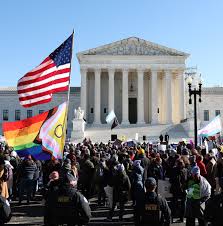

TABLE OF CONTENTS
Background: What Is the Case About?
Colorado's Minor Conversion Therapy Law
The Majority Opinion (Justice Gorsuch)
The Concurring Opinion (Justices Kagan and Sotomayor)
What the Ruling Does and Does Not Do
What This Means for Existing State Bans
The Medical Evidence Has Not Changed
Overview & Quick Reference
Case name: Chiles v. Salazar, 607 U.S. (2026)
Docket number: No. 24-539
Argued: October 7, 2025
Decided: March 31, 2026
Decision: Reversed and remanded, 8-1
Majority author: Justice Neil Gorsuch
Concurrence: Justice Elena Kagan, joined by Justice Sonia Sotomayor
Dissent: Justice Ketanji Brown Jackson
Holding: Colorado's Minor Conversion Therapy Law, as applied to talk therapy, regulates speech based on viewpoint. Lower courts erred by applying rational basis review. Strict scrutiny applies.
Effect: Colorado's law is not struck down. The case is returned to lower courts to evaluate the law under strict scrutiny.
The full opinion is available through the Supreme Court of the United States, the Legal Information Institute at Cornell Law School, and Justia.
Background: What is the Case About?
Chiles v. Salazar is the first Supreme Court case to directly address the constitutionality of state laws banning conversion therapy. It asks whether a state may prohibit a licensed mental health counselor from offering specific types of talk therapy to minor clients based on the content of what the counselor says.
The case arose from Colorado's 2019 Minor Conversion Therapy Law (MCTL), which prohibits licensed mental health professionals from engaging in "conversion therapy" with clients under 18. Conversion therapy is defined under the law as any practice or treatment that attempts to change an individual's sexual orientation or gender identity.
The plaintiff, Kaley Chiles, is a licensed professional counselor in Colorado Springs who provides "faith-informed" counseling. Some of her clients, including minors, come to her wanting to reduce or eliminate what they describe as unwanted same-sex attraction or to align their sense of identity more closely with their biological sex.
Under Colorado's law, Chiles argued that she could not offer talk therapy directed at those goals, even when the minor client and their family explicitly requested it, while she could lawfully offer talk therapy supporting gender transition. She argued this asymmetry represents unconstitutional viewpoint discrimination under the First Amendment.
The Parties
Petitioner: Kaley Chiles, a licensed professional counselor holding a master's degree in clinical mental health from a Colorado-accredited program. Chiles was represented by the Alliance Defending Freedom (ADF), a conservative Christian legal advocacy organization. ADF has previously argued before the Supreme Court in 303 Creative LLC v. Elenis (2023) and National Institute of Family and Life Advocates v. Becerra (2018).
Respondents: Patty Salazar, in her official capacity as Executive Director of the Colorado Department of Regulatory Agencies, and other state officials responsible for enforcing the MCTL. Colorado was represented by its state attorney general's office and received amicus support from the American Psychological Association and members of Congress, including 187 members who filed a joint amicus brief in August 2025.
Colorado's Minor Conversion Therapy Law
Colorado enacted the Minor Conversion Therapy Law (MCTL) in 2019. The law is codified at Colo. Rev. Stat. Section 12-245-224(1)(t)(V). It prohibits licensed counselors from engaging in "any practice or treatment" to change an individual's sexual orientation or gender identity or any effort to change certain behaviors or gender expressions.
The law contains an exemption for therapists "engaged in the practice of religious ministry," which effectively limits its reach to secular licensed practitioners. It also expressly permits counselors to facilitate "identity exploration and development" and to provide assistance to a person undergoing a gender transition.
Chiles argued that this asymmetry was the constitutional problem: the law allowed speech supporting one outcome (gender transition) while prohibiting speech supporting the opposite outcome (alignment with birth sex). Colorado argued that the law regulated professional medical conduct, not speech, and that the asymmetry reflected the state's determination that one form of intervention is evidence-based and the other is harmful.
Procedural History
District Court
Chiles filed suit in the U.S. District Court for the District of Colorado, seeking a preliminary injunction to block enforcement of the MCTL against her while the case proceeded. The district court denied the preliminary injunction. It concluded that the law regulated professional conduct rather than speech and that the effect on speech was only incidental. Under this framing, the district court applied rational basis review, the most deferential standard of constitutional scrutiny, and found the law constitutionally permissible. The district court also confirmed that Chiles had Article III standing to bring an as-applied pre-enforcement challenge.
Tenth Circuit Court of Appeals
Chiles appealed, and the U.S. Court of Appeals for the Tenth Circuit affirmed the district court's decision. The Tenth Circuit adopted the same professional conduct framework and the same rational basis standard. It agreed that Chiles had standing, that the law regulated what licensed counselors may do in their professional capacity rather than what they may say as citizens, and that Colorado had a rational basis for its determination that conversion therapy is harmful.
Supreme Court Certiorari
Chiles petitioned the Supreme Court for certiorari on the ground that federal courts of appeals were divided on the constitutional question and that the case presented an important and unresolved issue of First Amendment law. On March 10, 2025, the Supreme Court granted certiorari. Oral arguments were heard on October 7, 2025. The Court issued its decision on March 31, 2026.
The Circuit Split
One of the primary reasons the Supreme Court agreed to hear Chiles v. Salazar was to resolve a direct conflict among federal courts of appeals on the constitutional question of whether state conversion therapy bans are subject to rational basis review or strict scrutiny.
Ninth Circuit (Pickup v. Brown, 2013 and Tingley v. Ferguson, 2022): Upheld state conversion therapy bans by treating them as regulations of professional conduct that incidentally affect speech, subject to rational basis review.
Third Circuit (King v. Governor of New Jersey, 2014): Upheld New Jersey's conversion therapy ban under a similar professional conduct framework.
Eleventh Circuit (Otto v. City of Boca Raton, 2020): Struck down local Florida bans, applying a higher level of First Amendment scrutiny and holding that because therapy consists substantially of talk, it constitutes speech rather than regulable conduct.
The circuit split created an inconsistent national legal landscape. The Supreme Court's decision in Chiles v. Salazar was intended to provide a uniform constitutional framework applicable across all states.
The Supreme Court's Decision
The Supreme Court reversed the Tenth Circuit's decision 8-1 and remanded the case for further proceedings. SCOTUSblog's case summary describes the holding as follows: "Colorado's law banning conversion therapy, as applied to petitioner's talk therapy, regulates speech based on viewpoint, and the lower courts erred by failing to apply sufficiently rigorous First Amendment scrutiny."
The decision does not strike down Colorado's law. It changes the legal standard under which the law must be evaluated on remand. Colorado's law now must survive strict scrutiny, the most demanding level of constitutional review, which requires the government to demonstrate that its restriction is narrowly tailored to serve a compelling state interest. The case returns to lower courts for that analysis.
The Majority Opinion (Justice Gorsuch)
Justice Neil Gorsuch delivered the opinion of the Court, joined by Chief Justice Roberts and Justices Thomas, Alito, Sotomayor, Kagan, Kavanaugh, and Barrett.
Talk Therapy Is Speech
The majority's first major holding is that Kaley Chiles's talk therapy is speech, and that the First Amendment applies to it fully. The majority rejected Colorado's argument that the law regulates professional conduct rather than speech. As the opinion states, as summarized in Faegre Drinker's legal analysis: "The counselor was engaged in therapy that involved only the 'spoken word,' which is 'perhaps the quintessential form of protected speech' under the First Amendment."
Gorsuch wrote that a speaker's words do not lose First Amendment protection simply because the state characterizes them as a medical treatment or a professional service: "Her speech does not become conduct just because the State may call it that. Nor does her speech become conduct just because it can also be described as a 'treatment,' a 'therapeutic modality,' or anything else. The First Amendment is no word game."
Viewpoint Discrimination
The majority's second and more significant holding is that Colorado's law does not merely regulate the content of speech but regulates speech based on viewpoint, which is the most constitutionally suspect form of speech regulation.
The majority found that Colorado's law permitted counselors to express one side of a live professional and cultural debate (the view that gender transition is appropriate and supportable) while prohibiting them from expressing the other side (the view that alignment with birth sex may be the appropriate goal). This asymmetry, in the majority's analysis, constitutes viewpoint discrimination.
Gorsuch wrote: "Colorado's law goes a step further, prescribing what views she may and may not express." The majority further stated: "The First Amendment stands as a shield against any effort to enforce orthodoxy in thought or speech in this country. However well-intentioned, any law that suppresses speech based on viewpoint represents an egregious assault on both of those commitments."
Strict Scrutiny Required
Because the law constitutes viewpoint discrimination, the majority held that strict scrutiny applies. This means that on remand, Colorado must demonstrate that its law is narrowly tailored to serve a compelling state interest. The majority did not itself apply strict scrutiny to Colorado's law; it left that analysis for the lower courts.
The Majority's Hypothetical
In one of the opinion's most cited passages, Justice Gorsuch offered a hypothetical to illustrate that the constitutional principle applies symmetrically: "Consider a hypothetical law that is the mirror image of Colorado's. Instead of barring talk therapy designed to change a minor's sexual orientation or gender identity, this law bars therapy affirming those things. As Ms. Chiles readily acknowledges, the First Amendment would apply in the identical way." This passage signals that a conservative state could not constitutionally ban affirmative therapy either, under the same First Amendment framework.
The Concurring Opinion (Justices Kagan and Sotomayor)
Justice Elena Kagan, joined by Justice Sonia Sotomayor, wrote separately to agree with the majority's constitutional analysis while flagging an important question the Court left open.
Kagan agreed that Colorado's law, as written, constituted viewpoint discrimination and that strict scrutiny therefore applied. However, she noted that the outcome might have been different "if Colorado had instead enacted a content-based but viewpoint-neutral law." In that scenario, a law that prohibits all efforts to change a minor's gender identity or sexual orientation in any direction, without allowing the opposite direction, would "raise a different and more difficult question."
Kagan noted that such a law would not enable speech "on only one side" of an ideologically charged issue. She referenced the Court's 2024 trademark decision in Vidal v. Elster as an example where content-based but viewpoint-neutral regulation did not automatically trigger strict scrutiny.
The concurrence is significant because it provides a potential pathway for state legislatures to draft conversion therapy bans that might survive future constitutional challenge. A viewpoint-neutral law, one that restricts any licensed therapist from attempting to direct a minor's identity in any specific direction, might be treated differently by the courts. Legal scholars have identified Kagan's concurrence as the most practically important portion of the opinion for legislatures trying to preserve minor protections after the decision.
The Dissent (Justice Jackson)
Justice Ketanji Brown Jackson was the sole dissenter. Her dissent argued that the majority's holding threatens states' longstanding authority to regulate the practice of medicine and the delivery of health care.
Jackson wrote: "There is no right to practice medicine which is not subordinate to the police power of the States." She argued that the majority's decision "opens a dangerous can of worms," threatening states' ability to regulate medical care in any respect, extending the Constitution into what she characterized as "uncharted territory," and ultimately risking "grave harm to Americans' health and wellbeing."
Jackson's dissent drew on the historical foundation of state police power over licensed professions and argued that Colorado's law should be understood as a regulation of professional medical conduct, not of speech, because the professional context transforms what might otherwise be protected expression into regulable treatment. She contended that the majority's willingness to apply strict scrutiny to licensed professional communications could have broad downstream consequences for how states regulate a wide range of licensed professions, including physicians, attorneys, and financial advisors.
The dissent cited Lambert v. Yellowley, 272 U.S. 581, 596 (1926), a century-old precedent holding that the right to practice medicine is subordinate to state police power, and argued that this principle should have controlled the outcome.
Key Legal Concepts Explained
Strict Scrutiny
Strict scrutiny is the most demanding level of constitutional review that courts apply to government action. Under strict scrutiny, the government must demonstrate that its law is narrowly tailored to serve a compelling state interest. This is a high bar. Laws subjected to strict scrutiny are more often struck down than upheld, though the standard does not make the outcome automatic.
In the context of Chiles v. Salazar, strict scrutiny requires Colorado to show on remand that: (1) protecting minors from harmful conversion therapy is a compelling state interest (likely to be accepted by courts), and (2) the MCTL is narrowly tailored to achieve that interest (more legally contested, especially given the law's asymmetric treatment of different forms of talk therapy).
Rational Basis Review
Rational basis review is the most deferential level of constitutional scrutiny. Under this standard, a law is upheld if it is rationally related to any legitimate government interest. The lower courts applied rational basis review in Chiles v. Salazar and upheld Colorado's law under that standard. The Supreme Court held that rational basis review was the wrong standard.
Viewpoint Discrimination
Viewpoint discrimination is a form of speech regulation that the Supreme Court has treated as among the most constitutionally suspect. It occurs when the government regulates speech not merely based on its subject matter (content discrimination) but based on the particular opinion or perspective expressed on that subject. The Supreme Court has held that viewpoint discrimination is an "egregious form of content discrimination" from which governments must nearly always abstain.
The majority found that Colorado's law constituted viewpoint discrimination because it permitted counselors to express views favorable to gender transition while prohibiting views that might counsel against it, effectively requiring state-licensed counselors to adopt the government's preferred position on a contested question.
Professional Speech
The concept of "professional speech" refers to communications delivered by licensed professionals to clients or patients in the context of a professional relationship. The constitutional status of professional speech has been debated for years. In NIFLA v. Becerra (2018), the Supreme Court rejected the idea that professional speech is a category entitled to reduced First Amendment protection. Chiles v. Salazar builds on that foundation by holding that the professional context does not lower the First Amendment protection applicable to a therapist's words.
As-Applied Challenge
Chiles brought an as-applied challenge, meaning she challenged the law as applied specifically to her practice and her clients, not as a challenge to the law in all its applications. The Supreme Court's holding is therefore technically limited to the as-applied context: Colorado's law, as applied to Chiles's talk therapy, constitutes viewpoint discrimination subject to strict scrutiny. Other applications of the law may be evaluated differently.
What the Ruling Does and Does Not Do
What the Ruling Does
Establishes the constitutional standard. The ruling resolves the circuit split by holding that state laws regulating talk therapy based on viewpoint must be evaluated under strict scrutiny, not rational basis review. This is the binding national rule going forward.
Returns the case to lower courts. The case is remanded for further proceedings consistent with the majority's opinion. Colorado's law is not overturned; it must now survive strict scrutiny analysis.
Creates new vulnerability for existing state bans. State conversion therapy laws drafted in a manner similar to Colorado's, permitting therapy that supports transition while prohibiting therapy that counsels against it, are now subject to strict scrutiny and may face successful constitutional challenges.
Signals a First Amendment framework for professional speech. The ruling confirms that licensed professionals do not surrender First Amendment rights when they speak in their professional capacity. This has implications beyond conversion therapy.
What the Ruling Does Not Do
It does not strike down Colorado's law. The MCTL remains in effect in Colorado as of April 2026. The law is subject to further review on remand; it has not been invalidated.
It does not invalidate all state conversion therapy bans. The ruling applies to laws as structured like Colorado's. Laws drafted differently, particularly viewpoint-neutral laws of the kind described in Justice Kagan's concurrence, may be evaluated differently.
It does not make conversion therapy legal. Licensed practitioners in states with bans remain subject to those bans unless and until those bans are challenged and struck down under the new strict scrutiny standard. Professional licensing boards have not suspended enforcement pending the outcome.
It does not endorse conversion therapy. The majority opinion does not assess the effectiveness or safety of conversion therapy. The Court's ruling is about the constitutional framework for evaluating the law, not about the clinical merit of the practice. Justice Gorsuch noted explicitly that Colorado "may regard its policy as essential to public health and safety" while still holding that the First Amendment constrains how it pursues that policy.
It does not change the medical consensus. Every major medical and psychological organization in the United States, including the American Psychological Association, American Psychiatric Association, American Academy of Pediatrics, and SAMHSA, continues to hold that conversion therapy is ineffective, potentially harmful, and not appropriate care for minors.
What This Means for Existing State Bans
More than 23 states and the District of Columbia have enacted laws banning conversion therapy for minors by licensed practitioners, according to the Movement Advancement Project. The Chiles v. Salazar ruling has different implications for each depending on how each law is drafted.
Laws That May Face Immediate Challenge
State laws structured similarly to Colorado's, specifically laws that prohibit therapy directed toward reducing same-sex attraction or aligning with birth sex while permitting therapy that supports gender transition, are the most vulnerable to constitutional challenge under the new strict scrutiny standard.
Legal analysts following the ruling have identified California, New York, and Illinois as states with bans phrased in substantially similar terms.
The Alliance Defending Freedom and similar organizations have indicated intent to challenge additional state bans following the ruling.
Laws That May Be More Durable
Laws drafted in a viewpoint-neutral manner, prohibiting licensed therapists from attempting to direct a minor's gender identity or sexual orientation in any particular direction regardless of what that direction is, may be treated differently under Justice Kagan's concurrence framework. These laws could potentially survive strict scrutiny if they are narrowly tailored to the state's compelling interest in protecting minors from harmful therapeutic interventions.
No existing state ban was specifically drafted with this viewpoint-neutral structure in mind, but some may be interpreted or defended in a viewpoint-neutral manner depending on their specific language.
Consumer Fraud Laws
State and local consumer protection laws targeting the fraudulent marketing of conversion therapy, including the Ferguson v. JONAH precedent in New Jersey, operate under a different legal framework than licensing-based bans and may be less affected by the Chiles ruling. These laws target specific false commercial representations rather than the content of therapeutic speech, potentially placing them outside the scope of the viewpoint discrimination analysis.
Professional Licensing Board Authority
Even in states where statutory bans may be challenged, professional licensing boards retain authority to discipline practitioners for unprofessional conduct, incompetent practice, or violation of professional ethical standards. Boards affiliated with national organizations that have adopted anti-SOCE positions may continue to act on those standards independently of whether the state's statutory ban survives strict scrutiny review.
What This Means for Families
This section provides factual information about the practical implications of the ruling for families and minors. It does not constitute legal advice. Families with specific legal questions should consult a licensed attorney.
In Colorado
Colorado's Minor Conversion Therapy Law remains in effect as of April 2026. The Supreme Court did not strike it down; it remanded the case for further proceedings under strict scrutiny. Licensed counselors in Colorado are not free to offer conversion therapy simply because the Supreme Court ruled. The law is still on the books and enforcement has not been suspended. The outcome of the remand proceedings will determine the law's ultimate fate.
In States with Similar Bans
Families in states with bans structured similarly to Colorado's may see those bans challenged in the coming months and years. A successful as-applied challenge in one state would not automatically invalidate another state's law, but it would provide a legal roadmap that could be followed in other jurisdictions. Parents and caregivers should consult state-specific legal sources or licensed attorneys for information about current enforcement status in their state.
In States Without Bans
The ruling does not change the situation in states that have not enacted conversion therapy bans. In those states, licensed practitioners were already permitted to offer conversion therapy, and that remains the case.
What Has Not Changed About the Clinical Picture
The ruling does not change what the research shows about the outcomes associated with conversion therapy. The Williams Institute at UCLA estimates that approximately 698,000 LGBTQ+ adults in the United States have been subjected to conversion therapy. Research published in JAMA Psychiatry (2020) found recalled exposure to conversion efforts was associated with significantly elevated rates of psychological distress and lifetime suicide attempts among transgender adults.
The Family Acceptance Project has documented that youth subjected to combined parental and clinical conversion efforts attempted suicide at a rate of 63%, compared to 22% among peers with no such exposure.
A ruling about the constitutional framework for evaluating a law does not change those clinical findings.
The Medical Evidence Has Not Changed
The Supreme Court's ruling is a constitutional determination about the proper level of judicial scrutiny to apply to Colorado's law. It is not a scientific finding. The clinical and research record on conversion therapy has not changed as a result of the decision.
As Congressional Equality Caucus Chair Rep. Mark Takano stated following the ruling: "This decision does not change the fact that conversion therapy is still dangerous, disproven, and denounced by every major medical association in the United States."
The following positions remain unchanged:
The APA's 2021 resolution continues to hold that SOCE is "ineffective, potentially harmful, and not appropriate therapeutic practice."
SAMHSA's 2023 report continues to state that "SOGI change efforts in children and adolescents are harmful and should never be provided."
The American Academy of Pediatrics continues to hold that conversion therapy attempts are "not effective and can be harmful."
The World Health Organization's 2023 report continues to characterize conversion therapy as "a serious threat to the health and human rights" of those subjected to it and continues to call for its global elimination.
A Supreme Court ruling on First Amendment doctrine does not alter the scientific consensus on which these positions are based.
Potential Legislative Responses
The Chiles v. Salazar ruling has prompted legislative analysis and policy discussion about how states can preserve protections for minors in light of the new constitutional framework.
Viewpoint-Neutral Drafting
The most frequently discussed legislative response is redrafting state bans to be viewpoint-neutral, addressing the specific constitutional concern identified in Justice Kagan's concurrence. A viewpoint-neutral law might prohibit licensed therapists from engaging in any intervention designed to direct a minor's sexual orientation or gender identity in any predetermined direction, treating attempts to change orientation toward heterosexuality and attempts to change orientation toward LGBTQ+ identity identically.
Whether such a law would survive strict scrutiny is an open legal question that will likely require further litigation to resolve. State legislative staff and attorneys general in multiple states are reported to be reviewing existing statutes for potential redrafting.
Federal Legislation
The Chiles ruling has renewed calls for federal legislative action on conversion therapy. Proposed federal measures that have been introduced in prior sessions of Congress include the Therapeutic Fraud Prevention Act, which frames conversion therapy as a deceptive commercial practice subject to Federal Trade Commission oversight. This framing might be less vulnerable to First Amendment challenge than direct speech regulation because it targets the commercial representation of the service rather than the content of the therapeutic conversation.
Consumer Protection Approaches
State attorneys general and consumer protection agencies may pursue increased use of existing consumer fraud and deceptive trade practice statutes to address conversion therapy following the ruling. The consumer fraud framework, established as viable by Ferguson v. JONAH, addresses false commercial claims about efficacy rather than the content of therapeutic speech and may be more constitutionally durable under the Chiles framework.
Professional Licensing Standards
Professional licensing boards, whose standards are set by independent professional organizations rather than state legislatures, may pursue strengthened ethical rules that prohibit conversion therapy as a matter of professional incompetence or unprofessional conduct rather than as viewpoint-based speech regulation. Because ethical standards are set by the profession itself rather than by the government, they may rest on a different constitutional foundation.
The Path Forward
Chiles v. Salazar is not the final word on conversion therapy law in the United States. The case has been remanded for further proceedings, which means lower courts must now apply strict scrutiny to Colorado's specific law. That analysis will itself be subject to further appeal. Additional cases challenging conversion therapy bans in other states are expected to be filed in the near term, and some may reach the Supreme Court again with different factual records or differently drafted laws.
Legal scholars have identified several remaining open questions that future litigation or legislation will need to address:
Can Colorado's law, specifically, survive strict scrutiny? The remand proceedings will determine whether Colorado can demonstrate that its MCTL is narrowly tailored to serve a compelling state interest. Given the strength of the scientific consensus against conversion therapy, this argument is available to the state; whether it is sufficient under strict scrutiny is uncertain.
What happens to laws in California, New York, Illinois, and other states? States with laws structured similarly to Colorado's are likely to face as-applied challenges following Chiles. Those challenges will be governed by the Chiles framework but will turn on the specific language of each state's law and the evidence each state can marshal.
Can a viewpoint-neutral law survive? Justice Kagan's concurrence identifies this as the most important open question. If states can draft viewpoint-neutral prohibitions on conversion therapy that survive strict scrutiny, the overall framework of minor protection may be preserved in a different constitutional form.
What are the broader implications for professional speech regulation? Justice Jackson's dissent raises a question that will be litigated in other contexts: whether the Chiles framework, which subjects licensed professional communications to full First Amendment scrutiny, affects state authority to regulate a wide range of other professional services delivered substantially through speech.
The SCOTUSblog case page will continue to be updated with developments in the remand proceedings.
Frequently Asked Questions
Did the Supreme Court legalize conversion therapy?
No. The Supreme Court did not legalize conversion therapy. The Court held that Colorado's specific law must be evaluated under a higher constitutional standard (strict scrutiny) than the lower courts had applied (rational basis). Colorado's law remains in effect and has not been struck down. Licensed therapists in states with bans are not free to offer conversion therapy as a result of this ruling.
What does "remanded" mean?
"Remanded" means the case is sent back to the lower courts for further proceedings consistent with the Supreme Court's opinion. The lower courts must now analyze Colorado's law under strict scrutiny to determine whether it can survive that higher level of review. This process will take time and may itself be appealed again.
What is strict scrutiny and why does it matter?
Strict scrutiny is the most demanding level of constitutional review. It requires the government to prove that its law is narrowly tailored to serve a compelling state interest. Under this standard, the government has a higher burden to justify its restriction on speech. While a compelling interest in protecting minors from harmful therapy is likely available to Colorado, the question of whether the law is narrowly tailored is more contested.
Why did Justices Kagan and Sotomayor, who are generally considered liberal justices, join the majority?
Both Kagan and Sotomayor joined the majority opinion, which was an 8-1 decision, making it one of the most lopsided rulings on a contested social issue in recent memory. Their concurrence indicates that they agreed the Colorado law constituted viewpoint discrimination, which is a specific form of speech regulation that the Supreme Court has consistently treated as constitutionally suspect. Kagan's concurrence also noted that the same First Amendment principle would apply to a law banning affirmative therapy, suggesting that the ruling has implications in both directions of this policy debate.
Does this ruling apply to laws in other states?
The ruling's formal legal holding applies to the case before the Court: the as-applied challenge to Colorado's law by Kaley Chiles. However, the constitutional framework established by the ruling, specifically that state laws regulating talk therapy based on viewpoint must survive strict scrutiny, applies nationwide. States with laws structured similarly to Colorado's should expect constitutional challenges brought under this framework.
Does the ruling mean conversion therapy is safe or effective?
No. The Supreme Court's ruling addresses the constitutional framework for evaluating a specific law. It does not assess the safety or efficacy of conversion therapy. The scientific and medical consensus, as documented by the American Psychological Association, American Academy of Pediatrics, SAMHSA, and the World Health Organization, has not changed. Conversion therapy continues to be characterized by every major professional body as ineffective and potentially harmful.
What does this mean for the 23-plus state bans currently in effect?
As of April 2026, those bans remain in effect. The ruling does not automatically invalidate any existing state ban. However, it provides a legal framework and roadmap for as-applied constitutional challenges in each of those states. Challenges are expected to be filed in states with laws structured similarly to Colorado's. The outcome in each state will depend on the specific language of that state's law and the proceedings before each individual court.
Can states still protect minors from conversion therapy after this ruling?
Legal scholars, legislative staff, and policy advocates are actively analyzing this question. Justice Kagan's concurrence identifies viewpoint-neutral drafting as a potential path. Consumer protection and consumer fraud statutes provide another avenue. Professional licensing board standards represent a third. Whether any of these approaches can be implemented in a way that is both constitutionally durable and practically effective is an open question that will be addressed through legislation and continued litigation.
Primary Sources & Further Reading
Primary Legal Sources
Chiles v. Salazar, 607 U.S. (2026). Full opinion: Supreme Court of the United States (PDF).
Full opinion text: Legal Information Institute, Cornell Law School.
Full opinion text: Justia U.S. Supreme Court Center.
Case page and filings: SCOTUSblog.
Colorado Minor Conversion Therapy Law: Colo. Rev. Stat. Section 12-245-224.
Predecessor Cases
Pickup v. Brown, 740 F.3d 1208 (9th Cir. 2014). Ninth Circuit.
King v. Governor of New Jersey, 767 F.3d 216 (3d Cir. 2014). FindLaw.
Otto v. City of Boca Raton, 981 F.3d 854 (11th Cir. 2020). Justia.
NIFLA v. Becerra, 585 U.S. 755 (2018). Justia.
Legal Analysis
Faegre Drinker Biddle and Reath (March 31, 2026). Supreme Court Decides Chiles v. Salazar.
SCOTUSblog, Amy Howe (March 31, 2026). Supreme Court sides with therapist in challenge to Colorado's conversion therapy ban.
CBS News (March 31, 2026). Supreme Court rules against Colorado's conversion therapy ban on First Amendment grounds.
Congressional Equality Caucus (March 31, 2026). Statement on Chiles v. Salazar.
Wikipedia. Chiles v. Salazar.
Medical and Scientific Positions (Unchanged by the Ruling)
American Psychological Association (2021). Resolution on Sexual Orientation and Gender Identity Change Efforts.
American Academy of Pediatrics (2018). Policy statement on gender-diverse youth.
SAMHSA (2023). Moving Beyond Change Efforts.
World Health Organization (2023). Conversion therapy: An overview of systematic review evidence.
Williams Institute, UCLA (2019). Conversion therapy and LGBTQ youth.
Turban, J. L., et al. (2020). Association between recalled exposure to gender identity conversion efforts and psychological distress and suicide attempts. JAMA Psychiatry.
The Trevor Project (2020). Conversion therapy and suicide.
Family Acceptance Project, San Francisco State University. Research and educational resources.
Legislative Tracking
Movement Advancement Project. Conversion therapy laws: State-by-state tracker.
National Center for Lesbian Rights. Born Perfect campaign.