
Subscribe to the CT4F Newsletter to stay informed!
Chris Dowling
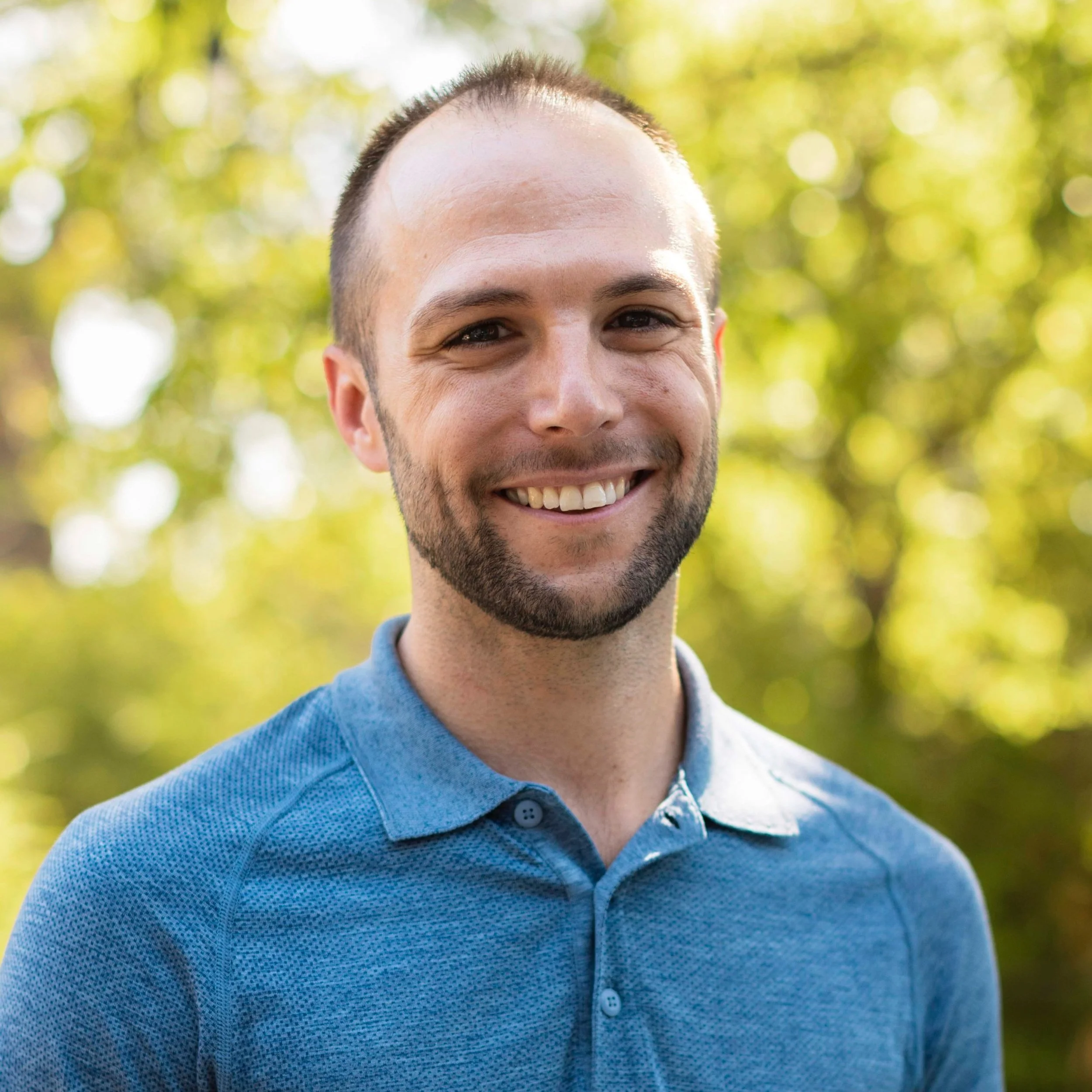
Chris Dowling was as devout as a young Catholic can be. He spent a gap year as a missionary, attended a conservative Catholic university, worked in full-time Catholic ministry, and at one point entered seminary to become a priest. He was also, from the ages of 18 to 28, in conversion therapy.
"I did a gap year as a missionary, went to a very conservative Orthodox Catholic university, and then I worked in full-time Catholic ministry, at one point entering the seminary to be a Catholic priest," he says. "And all throughout that time, from the ages of 18 to 28, I was very involved in conversion therapy, until I came out at 28 years old."
Now 37 and living in Dallas, where he works in nonprofit philanthropy, Chris has rebuilt what those ten years took from him. He is married, attends church with his husband, and is extremely close with the family he was once taught to blame. His story is a rare thing: an unflinching account of the practice's cost, told by someone who still loves his faith and his family.
Snapshot of This True Story:
Chris Dowling, 37, lives in Dallas, Texas, and works in nonprofit philanthropy and fundraising. He was born and raised Catholic and was deeply involved in his faith as a missionary, a ministry worker, and briefly a seminarian.
He was involved in conversion therapy from ages 18 to 28, and came out at 28.
He first encountered the practice in a confession, when a priest told him that same-sex attraction comes from a broken relationship with one's father and family.
That narrative, he says, pulled him away from his own family for a decade before a strong reconciliation.
Over ten years, he spent at least $50,000 of his own money on weekly counseling, retreats, and inpatient treatment, at one point taking out a medical loan.
He never once saw an LGBTQ person who was both thriving and a person of faith, and had been taught that LGBTQ people wanted to destroy the church and family.
Today he is married, close with his family, calls himself pro-family, and makes it his mission to stay in relationship with people who disagree with him.
It Began in a Confession Booth
For Chris, conversion therapy did not start with a program or a diagnosis. It started with a sentence from a priest.
"I first heard about conversion therapy from essentially the first time I came out to a religious figure and superior," he says. "I was 18 years old, and I was in confession with a Catholic priest, and in confessing my sin of same-sex attraction and lust, he very promptly followed up with, ' How was your relationship with your father?"
From there came the theory that would shape the next decade of his life. "He began to explain that the source of same-sex attraction is a broken relationship with your father, your parents, and struggles in your family of upbringing." It is a claim that sounds clinical and sounds caring, and it is the theoretical heart of most orientation change efforts. It is also false. There is no scientific support for the idea that family relationships or parenting cause a person to be gay.
A Decade, and $50,000
One of the least discussed harms of conversion therapy is how much it can consume, not only in years but in money. Chris kept count.
"I did freely choose conversion therapy at age 18," he says, "but in doing so, it extracted a huge financial burden." He describes near-weekly counseling for a decade, healing retreats that ran over a thousand dollars apiece, and thousands more at a Catholic institute focused on sexual ethics. "I tallied it, and I spent at least $50,000 of my own money between the ages of 18 and 28, even though I was a ministry worker, not making much money."
The escalation ended in a hospital. "At one point, I even took out a medical loan to go to inpatient psychological treatment before I finally came out at 28." Ten years, a small fortune, and a loan for inpatient care, all in pursuit of a change that the practice's own record shows does not happen. What it produces instead are documented harms that can follow a person for life.
The Narrative That Took His Family
The cruelest part of the father-and-family theory is what it does to a young person's actual family. Chris lived that consequence in full.
"Because of the narrative that I believed, that my gay experience was because of a broken relationship with my family, it tore me away from my family for those ten years," he says. Convinced his loved ones were the source of his struggle, he pulled toward the church and away from home. "I believe they were the cause of what caused the greatest shame in my life, and I drew closer and closer to the church and away from them."
This is the mechanism families most need to see. A practice that claims to heal instead teaches a child that the people who love them are to blame, and family rejection and estrangement are among the strongest drivers of a young person's serious risk. Chris's decade of distance was not a side effect. It was the theory working as designed.
The turn came when he stopped. "I came out at 28 and began a really strong healing journey with my family, for whom I am extremely close with today, thankfully." The relationship the practice spent ten years dismantling was, in the end, repairable.
Never Seeing Someone Like Who He Would Become
Part of what kept Chris inside the practice was that he had never seen an alternative. He had no picture of a life that held both his faith and his sexuality.
"I never really knew any LGBTQ people that were thriving, that were people of faith," he says. "We were really taught to stay away, because of the influence. I thought that LGBTQ people all hated the church and hated family, and they were out to destroy the church and family." Then comes the line that reframes everything: "And now I am a part of that hated group that I once thought was so dangerous."
The reality of his life is the opposite of what he was warned about. "I attend church with my husband. I'm very close with my family. We're very pro-family." Every major health authority rejects the practice he once believed in, and organizations like PFLAG now help families of faith see exactly the kind of thriving, faithful LGBTQ life he could never picture at 18.
Where He Stands Now
What Chris wants most is not an argument won but a distance closed. He has made it his purpose to stay in relationship across the very divide that once defined his world.
"That's a passion of mine, to try to stay in relationship with people who might be unaffirming, and doing that for myself in a safe way," he says. He and his husband remain connected to some people who are not affirming but are willing to stay in relationship, and for many of those people, he notes, the couple may be the only faithful LGBTQ people they will ever really know.
He lays the blame less on individuals than on the walls between them. "It's our media, social media, religious echo chambers that we all get in, where it seems like we dialogue less and less, and we know less and less of people on the other side." His hope is disarmingly simple. "My heart's desire is that more people would interact with those that they deem other, that they're far from."
For a parent of faith, Chris is living proof of the thing conversion therapy insisted was impossible. A person can be gay, married, close to their family, devoted to their church, and pro-family, all at once.
Key Lessons from Chris's Story for Parents
The "broken family" theory is false. Chris was told his sexuality came from his father and his family. Science does not support that idea, and believing it cost him ten years with the people he loved.
Blaming the family harms the family. The narrative did not bring Chris closer to health; it drove a decade-long wedge between him and his parents. The practice pulls children away from home, not toward it.
Conversion therapy can consume years and savings. Chris spent at least $50,000 over ten years and took out a loan for inpatient care, all for a change that never came.
Reconciliation is possible. The family the theory took from him is the family he is extremely close with today. Coming out was the beginning of that repair, not the end of the relationship.
Your child can hold faith and family, too. Chris could not picture a thriving, faithful, family-loving gay life because he had never seen one. He is that life now. Showing a child it is possible is its own form of protection.
Watch Chris's Story Here
Share Your Own Story
If this account resonated with you and you'd like to share your story, please feel free to share your own experiences surrounding conversion therapy in any capacity. We look forward to hearing your story.