Subscribe to the CT4F Newsletter to stay informed!

An Olympic Skater Names What Happened to Him at 21, and Why He Waited a Decade to Say It Out Loud
For years, Tim Koleto filed it away as "the weird Christian thing."
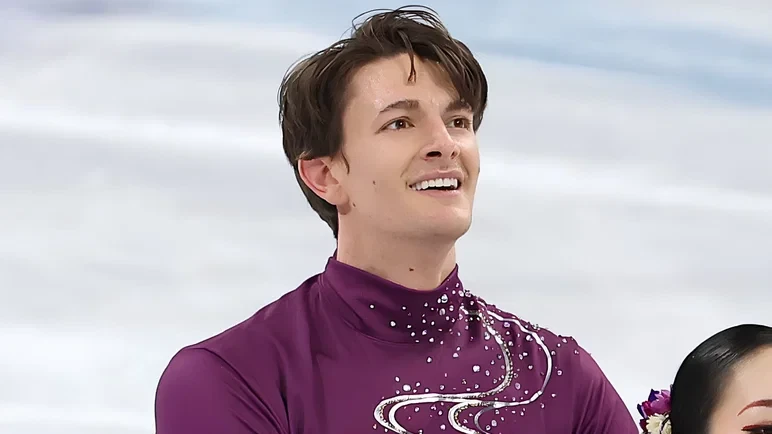
The Olympic ice dancer, part of the silver medal-winning Japanese team at the 2022 Beijing Winter Games, was 21 and about to leave his hometown of Colorado Springs for a new chapter in Michigan. Before he went, he was sent to see a family friend who, he was told, would simply wish him well.
"I was told, 'They're going to pray over you', bang the champagne against the ship, and then you go off into the sunset," Koleto recently told Outsports, recalling the 2013 encounter.
What happened instead has taken him more than a decade to name. The woman sat him down and, he says, told him he had "a homosexual target on your back." She said she wasn't strong enough to pray over him alone and called in her husband, a priest. The two of them laid hands on him to "pray it out," Koleto recalls, and then sent him on his way.
He didn't have a word for it at the time. In the evangelical world he grew up in, he says, adults claiming they could counteract being gay through prayer was so ordinary it barely registered. "I'd been programmed in my religion that this is wrong and impure, something that needs to be prayed away, like a perversion," he told the outlet. So he let it sink into his subconscious and got on with chasing the Olympics.
A therapist gave it a name
The memory resurfaced years later, in the lead-up to Beijing, when Koleto began seeing a psychotherapist in Montreal, where he still lives. When he mentioned the Colorado Springs couple, his therapist's response stopped him: How did it feel to go through conversion therapy?
"My therapist said what happened to me would be illegal in Canada," Koleto said. "I had never perceived it before as conversion therapy, and that stuck with me for a while."
That reframing became part of why, in 2023, he decided to come out publicly as bisexual, at the start of Pride Month, on Instagram. He had been out privately to his family, friends, and then-wife for years. But, as he put it, "there are a lot of kids who have been through something similar."
His instinct about how common his experience was tracks with the research. A 2024 study from UCLA's Williams Institute estimates that roughly 700,000 LGBTQ adults in the United States have undergone conversion therapy at some point, about half of them as adolescents. Every major American medical and mental health body, including the American Psychological Association, the American Academy of Pediatrics, and the American Medical Association, has rejected the practice as ineffective and harmful, with research linking it to depression, anxiety, and elevated suicide risk.
A practice still contested in the courts
Koleto is speaking out at a fraught legal moment. In March 2026, the U.S. Supreme Court ruled against the 2019 Colorado law banning conversion therapy for minors, sending the case back to the lower courts. In response, Colorado lawmakers advanced a new bill that would let survivors of the practice sue the practitioners responsible privately. It has cleared the legislature and is expected to pass, though as of this writing, it isn't certain that Gov. Jared Polis will sign it.
Most U.S. states still have not fully banned the practice for minors. For Koleto, that gap is part of why visibility matters, especially in sports, where openly LGBTQ athletes remain rare.
"Maybe they're skaters going to the rink and feel like they don't fit in. They're not that feminine, but they're not that macho or masculine either," he said. "It would have been nice when I was that kid in Colorado Springs, feeling confused and left out, to have had someone to look at and feel some sense of representation."
"I'm so sorry I wasn't brave enough to tell you sooner."
Koleto's coming out set off something he didn't expect. After a group call to his mother and older sister, his phone rang again, just his sister this time, crying. On that call, she came out to him, too.
"She says, 'I'm so sorry I wasn't brave enough to tell you sooner.' And it was a beautiful moment in both of our lives," he recalled. "It started a chain reaction of me slowly feeling comfortable, like I didn't have to keep waiting to figure out if I had to pick one side or the other."
His family, he says, has largely come through for him, even with a father who remains deeply religious. "I'm quite lucky."
That sense of being one of the fortunate ones is something survivors' advocates emphasize is far from guaranteed. Research on family responses, including the work of the Family Acceptance Project at San Francisco State University, has consistently found that family acceptance is among the strongest protective factors for LGBTQ young people, while rejection is tied to markedly higher rates of depression and suicide attempts.
Identity, on and off the ice
It's hard to talk to Koleto without talking about identity. Born in Montana, raised in Colorado Springs, he has lived on three continents and competed for four nations: the United States, South Korea, Norway, and finally Japan, where he became a naturalized citizen in 2020. He won the Olympic silver alongside his then-wife and ice dance partner, Misato Komatsubara, a moment he calls "the pinnacle" of his athletic career.
The couple has since separated, but recently skated together again in shows in the U.K. and Australia. Since retiring from competition in 2025, Koleto has been performing, coaching, writing a novel, and easing into advocacy, including, in a February 2026 interview with the newsletter Out of Your League, speaking openly about biphobia and his place as one of the very few out bisexual men in elite sport.
He has been pointed out, too, about not leaving trans people behind. He publicly backed Skate Canada's decision to pull events from Alberta after the province restricted trans women's participation in women's sports, telling the interviewer he felt "anger and frustration" at efforts within the queer community to trade away trans acceptance for "more 'culturally palatable' queer identities."
There's a quieter kind of advocacy he keeps returning to. "For bi people, I think the soft advocacy of just being ourselves is the most important thing," he said. He talks about wanting better representation in Japan, where, he notes, openly discussing one's personal life cuts against the culture, and about an America that, in his view, "more than ever" needs "advocacy, support, safety and community for queer people and queer athletes."
Now living in Montreal, he mentions with a grin, in his first relationship with a boyfriend, Koleto seems less interested in being a cautionary tale than a signpost. The 21-year-old who got prayed over on his way out of Colorado Springs didn't have anyone to look to. He'd like to be that person for someone else.
This article is based on Tim Koleto's June 2026 interview with Outsports and his February 2026 interview with Out of Your League.
Publicaciones recientes


An Olympic Skater Names What Happened to Him at 21, and Why He Waited a Decade to Say It Out Loud
For years, Tim Koleto filed it away as "the weird Christian thing."
The Olympic ice dancer, part of the silver medal-winning Japanese team at the 2022 Beijing Winter Games, was 21 and about to leave his hometown of Colorado Springs for a new chapter in Michigan. Before he went, he was sent to see a family friend who, he was told, would simply wish him well.
"I was told, 'They're going to pray over you', bang the champagne against the ship, and then you go off into the sunset," Koleto recently told Outsports, recalling the 2013 encounter.
What happened instead has taken him more than a decade to name. The woman sat him down and, he says, told him he had "a homosexual target on your back." She said she wasn't strong enough to pray over him alone and called in her husband, a priest. The two of them laid hands on him to "pray it out," Koleto recalls, and then sent him on his way.
He didn't have a word for it at the time. In the evangelical world he grew up in, he says, adults claiming they could counteract being gay through prayer was so ordinary it barely registered. "I'd been programmed in my religion that this is wrong and impure, something that needs to be prayed away, like a perversion," he told the outlet. So he let it sink into his subconscious and got on with chasing the Olympics.
A therapist gave it a name
The memory resurfaced years later, in the lead-up to Beijing, when Koleto began seeing a psychotherapist in Montreal, where he still lives. When he mentioned the Colorado Springs couple, his therapist's response stopped him: How did it feel to go through conversion therapy?
"My therapist said what happened to me would be illegal in Canada," Koleto said. "I had never perceived it before as conversion therapy, and that stuck with me for a while."
That reframing became part of why, in 2023, he decided to come out publicly as bisexual, at the start of Pride Month, on Instagram. He had been out privately to his family, friends, and then-wife for years. But, as he put it, "there are a lot of kids who have been through something similar."
His instinct about how common his experience was tracks with the research. A 2024 study from UCLA's Williams Institute estimates that roughly 700,000 LGBTQ adults in the United States have undergone conversion therapy at some point, about half of them as adolescents. Every major American medical and mental health body, including the American Psychological Association, the American Academy of Pediatrics, and the American Medical Association, has rejected the practice as ineffective and harmful, with research linking it to depression, anxiety, and elevated suicide risk.
A practice still contested in the courts
Koleto is speaking out at a fraught legal moment. In March 2026, the U.S. Supreme Court ruled against the 2019 Colorado law banning conversion therapy for minors, sending the case back to the lower courts. In response, Colorado lawmakers advanced a new bill that would let survivors of the practice sue the practitioners responsible privately. It has cleared the legislature and is expected to pass, though as of this writing, it isn't certain that Gov. Jared Polis will sign it.
Most U.S. states still have not fully banned the practice for minors. For Koleto, that gap is part of why visibility matters, especially in sports, where openly LGBTQ athletes remain rare.
"Maybe they're skaters going to the rink and feel like they don't fit in. They're not that feminine, but they're not that macho or masculine either," he said. "It would have been nice when I was that kid in Colorado Springs, feeling confused and left out, to have had someone to look at and feel some sense of representation."
"I'm so sorry I wasn't brave enough to tell you sooner."
Koleto's coming out set off something he didn't expect. After a group call to his mother and older sister, his phone rang again, just his sister this time, crying. On that call, she came out to him, too.
"She says, 'I'm so sorry I wasn't brave enough to tell you sooner.' And it was a beautiful moment in both of our lives," he recalled. "It started a chain reaction of me slowly feeling comfortable, like I didn't have to keep waiting to figure out if I had to pick one side or the other."
His family, he says, has largely come through for him, even with a father who remains deeply religious. "I'm quite lucky."
That sense of being one of the fortunate ones is something survivors' advocates emphasize is far from guaranteed. Research on family responses, including the work of the Family Acceptance Project at San Francisco State University, has consistently found that family acceptance is among the strongest protective factors for LGBTQ young people, while rejection is tied to markedly higher rates of depression and suicide attempts.
Identity, on and off the ice
It's hard to talk to Koleto without talking about identity. Born in Montana, raised in Colorado Springs, he has lived on three continents and competed for four nations: the United States, South Korea, Norway, and finally Japan, where he became a naturalized citizen in 2020. He won the Olympic silver alongside his then-wife and ice dance partner, Misato Komatsubara, a moment he calls "the pinnacle" of his athletic career.
The couple has since separated, but recently skated together again in shows in the U.K. and Australia. Since retiring from competition in 2025, Koleto has been performing, coaching, writing a novel, and easing into advocacy, including, in a February 2026 interview with the newsletter Out of Your League, speaking openly about biphobia and his place as one of the very few out bisexual men in elite sport.
He has been pointed out, too, about not leaving trans people behind. He publicly backed Skate Canada's decision to pull events from Alberta after the province restricted trans women's participation in women's sports, telling the interviewer he felt "anger and frustration" at efforts within the queer community to trade away trans acceptance for "more 'culturally palatable' queer identities."
There's a quieter kind of advocacy he keeps returning to. "For bi people, I think the soft advocacy of just being ourselves is the most important thing," he said. He talks about wanting better representation in Japan, where, he notes, openly discussing one's personal life cuts against the culture, and about an America that, in his view, "more than ever" needs "advocacy, support, safety and community for queer people and queer athletes."
Now living in Montreal, he mentions with a grin, in his first relationship with a boyfriend, Koleto seems less interested in being a cautionary tale than a signpost. The 21-year-old who got prayed over on his way out of Colorado Springs didn't have anyone to look to. He'd like to be that person for someone else.
This article is based on Tim Koleto's June 2026 interview with Outsports and his February 2026 interview with Out of Your League.
Publicaciones recientes
An Olympic Skater Names What Happened to Him at 21, and Why He Waited a Decade to Say It Out Loud
For years, Tim Koleto filed it away as "the weird Christian thing."
The Olympic ice dancer, part of the silver medal-winning Japanese team at the 2022 Beijing Winter Games, was 21 and about to leave his hometown of Colorado Springs for a new chapter in Michigan. Before he went, he was sent to see a family friend who, he was told, would simply wish him well.
"I was told, 'They're going to pray over you', bang the champagne against the ship, and then you go off into the sunset," Koleto recently told Outsports, recalling the 2013 encounter.
What happened instead has taken him more than a decade to name. The woman sat him down and, he says, told him he had "a homosexual target on your back." She said she wasn't strong enough to pray over him alone and called in her husband, a priest. The two of them laid hands on him to "pray it out," Koleto recalls, and then sent him on his way.
He didn't have a word for it at the time. In the evangelical world he grew up in, he says, adults claiming they could counteract being gay through prayer was so ordinary it barely registered. "I'd been programmed in my religion that this is wrong and impure, something that needs to be prayed away, like a perversion," he told the outlet. So he let it sink into his subconscious and got on with chasing the Olympics.
A therapist gave it a name
The memory resurfaced years later, in the lead-up to Beijing, when Koleto began seeing a psychotherapist in Montreal, where he still lives. When he mentioned the Colorado Springs couple, his therapist's response stopped him: How did it feel to go through conversion therapy?
"My therapist said what happened to me would be illegal in Canada," Koleto said. "I had never perceived it before as conversion therapy, and that stuck with me for a while."
That reframing became part of why, in 2023, he decided to come out publicly as bisexual, at the start of Pride Month, on Instagram. He had been out privately to his family, friends, and then-wife for years. But, as he put it, "there are a lot of kids who have been through something similar."
His instinct about how common his experience was tracks with the research. A 2024 study from UCLA's Williams Institute estimates that roughly 700,000 LGBTQ adults in the United States have undergone conversion therapy at some point, about half of them as adolescents. Every major American medical and mental health body, including the American Psychological Association, the American Academy of Pediatrics, and the American Medical Association, has rejected the practice as ineffective and harmful, with research linking it to depression, anxiety, and elevated suicide risk.
A practice still contested in the courts
Koleto is speaking out at a fraught legal moment. In March 2026, the U.S. Supreme Court ruled against the 2019 Colorado law banning conversion therapy for minors, sending the case back to the lower courts. In response, Colorado lawmakers advanced a new bill that would let survivors of the practice sue the practitioners responsible privately. It has cleared the legislature and is expected to pass, though as of this writing, it isn't certain that Gov. Jared Polis will sign it.
Most U.S. states still have not fully banned the practice for minors. For Koleto, that gap is part of why visibility matters, especially in sports, where openly LGBTQ athletes remain rare.
"Maybe they're skaters going to the rink and feel like they don't fit in. They're not that feminine, but they're not that macho or masculine either," he said. "It would have been nice when I was that kid in Colorado Springs, feeling confused and left out, to have had someone to look at and feel some sense of representation."
"I'm so sorry I wasn't brave enough to tell you sooner."
Koleto's coming out set off something he didn't expect. After a group call to his mother and older sister, his phone rang again, just his sister this time, crying. On that call, she came out to him, too.
"She says, 'I'm so sorry I wasn't brave enough to tell you sooner.' And it was a beautiful moment in both of our lives," he recalled. "It started a chain reaction of me slowly feeling comfortable, like I didn't have to keep waiting to figure out if I had to pick one side or the other."
His family, he says, has largely come through for him, even with a father who remains deeply religious. "I'm quite lucky."
That sense of being one of the fortunate ones is something survivors' advocates emphasize is far from guaranteed. Research on family responses, including the work of the Family Acceptance Project at San Francisco State University, has consistently found that family acceptance is among the strongest protective factors for LGBTQ young people, while rejection is tied to markedly higher rates of depression and suicide attempts.
Identity, on and off the ice
It's hard to talk to Koleto without talking about identity. Born in Montana, raised in Colorado Springs, he has lived on three continents and competed for four nations: the United States, South Korea, Norway, and finally Japan, where he became a naturalized citizen in 2020. He won the Olympic silver alongside his then-wife and ice dance partner, Misato Komatsubara, a moment he calls "the pinnacle" of his athletic career.
The couple has since separated, but recently skated together again in shows in the U.K. and Australia. Since retiring from competition in 2025, Koleto has been performing, coaching, writing a novel, and easing into advocacy, including, in a February 2026 interview with the newsletter Out of Your League, speaking openly about biphobia and his place as one of the very few out bisexual men in elite sport.
He has been pointed out, too, about not leaving trans people behind. He publicly backed Skate Canada's decision to pull events from Alberta after the province restricted trans women's participation in women's sports, telling the interviewer he felt "anger and frustration" at efforts within the queer community to trade away trans acceptance for "more 'culturally palatable' queer identities."
There's a quieter kind of advocacy he keeps returning to. "For bi people, I think the soft advocacy of just being ourselves is the most important thing," he said. He talks about wanting better representation in Japan, where, he notes, openly discussing one's personal life cuts against the culture, and about an America that, in his view, "more than ever" needs "advocacy, support, safety and community for queer people and queer athletes."
Now living in Montreal, he mentions with a grin, in his first relationship with a boyfriend, Koleto seems less interested in being a cautionary tale than a signpost. The 21-year-old who got prayed over on his way out of Colorado Springs didn't have anyone to look to. He'd like to be that person for someone else.
This article is based on Tim Koleto's June 2026 interview with Outsports and his February 2026 interview with Out of Your League.