Subscribe to the CT4F Newsletter to stay informed!
The Supreme Court's Ruling in Chiles v. Salazar: What Families Need to Know
What the Supreme Court Decided, and Why It Matters for Your Family
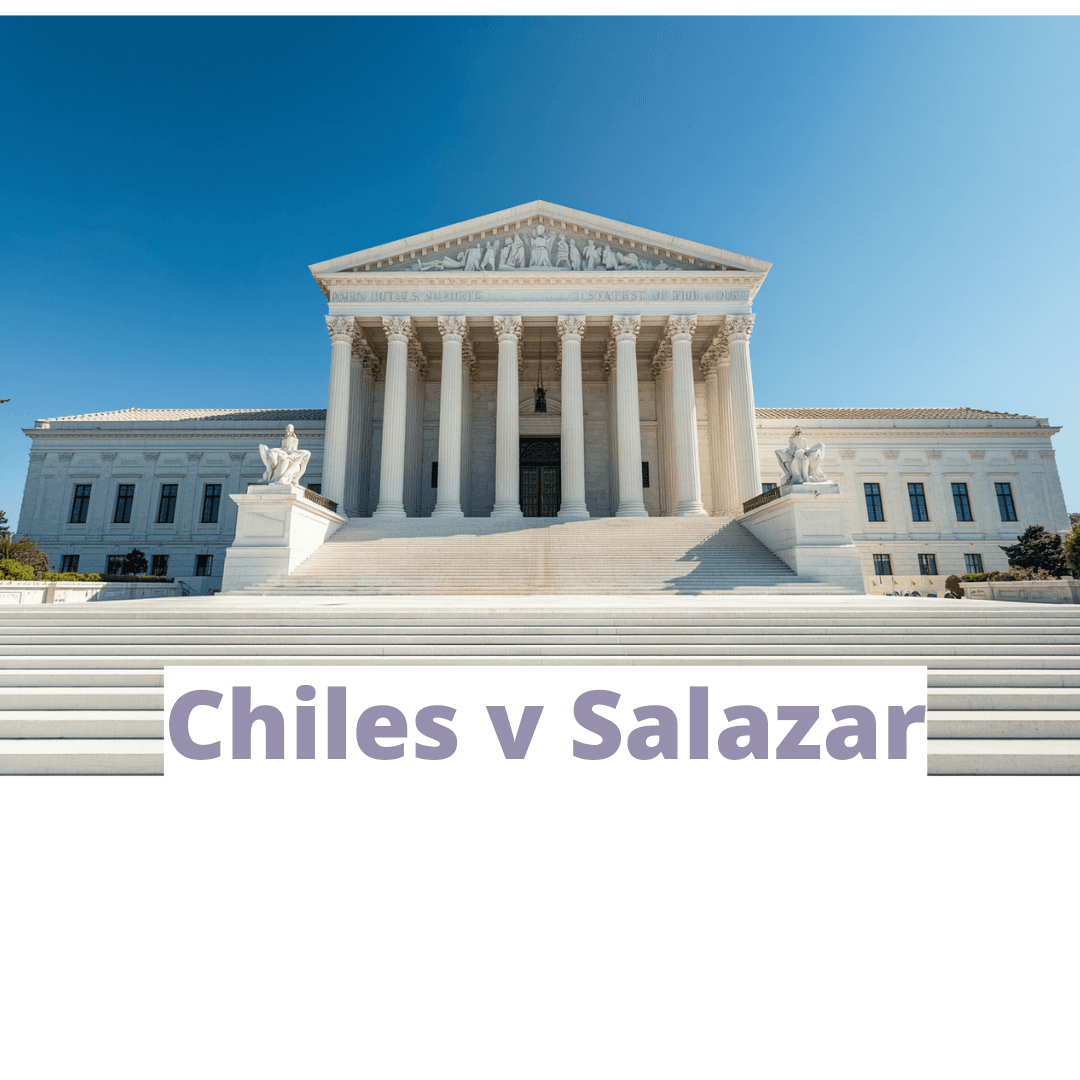
On March 31, 2026, the global Transgender Day of Visibility, the U.S. Supreme Court ruled 8–1 that Colorado's Minor Conversion Therapy Law, as applied to talk therapy, regulates speech based on viewpoint and therefore violates the First Amendment. Justice Neil Gorsuch authored the majority opinion. Justice Ketanji Brown Jackson was the sole dissenter, reading her dissent from the bench, a rare step that signals deep disagreement with the Court's direction.
The case was brought by Kaley Chiles, a licensed Christian counselor in Colorado who was represented by the Alliance Defending Freedom (ADF), the same conservative legal organization behind 303 Creative v. Elenis. Chiles argued that Colorado's 2019 law, which prohibited licensed mental health professionals from engaging in practices aimed at changing a minor's sexual orientation or gender identity, censored what she could say in therapy sessions.
Colorado maintained that its law was a legitimate exercise of the state's long-standing authority to regulate health care, backed by the consensus of every major medical and mental health association in the country. The state argued it was regulating a dangerous, discredited medical treatment, not suppressing speech.
The Court disagreed, holding that because Chiles provides only talk therapy (no physical interventions, no medications), banning what she says to her patients amounts to viewpoint discrimination. The case now returns to the Tenth Circuit, where Colorado's law will be evaluated under strict scrutiny, the most demanding constitutional standard. Few laws survive that test.
What the Ruling Does Not Do
This is a narrow ruling. It does not strike down Colorado's law outright.
It does not declare conversion therapy safe or effective.
And it does not prevent families who've been harmed by these practices from pursuing medical malpractice claims against practitioners who cause damage.
What This Means for Families Across the Country
Over 20 States Now Face Legal Uncertainty
More than 23 states and Washington, D.C., have conversion therapy bans on the books. Each of these laws is now potentially vulnerable to challenge under the framework the Court established. The Alliance Defending Freedom has signaled its intent to challenge bans in additional states.
For parents, this creates a more dangerous landscape. Before this ruling, licensed therapists in those 23+ states faced professional consequences (fines, probation, loss of licensure) for subjecting children to a practice that every mainstream medical association has condemned as ineffective and harmful. That guardrail has weakened.
The Kagan Concurrence: A Double-Edged Sword
Justice Elena Kagan, joined by Justice Sotomayor, wrote a concurrence that agreed with the majority but included a pointed observation: if a state cannot ban talk therapy designed to change a child's orientation or identity, a state also cannot ban therapy that affirms a child's identity. In other words, the same First Amendment logic protects counselors who affirm young people, too. Kagan also left the door open, noting that a viewpoint-neutral version of the law would raise "a different and more difficult question", a signal that more carefully drafted legislation might survive future challenges.
The Jackson Dissent: A Warning About What's at Stake
Justice Jackson's 35-page dissent warned that the ruling "opens a dangerous can of worms" by undermining states' authority to regulate medical care when the treatment in question happens to involve words rather than scalpels. She wrote that the decision "ultimately risks grave harm to Americans' health and wellbeing."
The Medical Consensus Has Not Changed
Nothing about this legal ruling changes the science. The American Psychiatric Association, the American Psychological Association, the American Medical Association, the American Academy of Pediatrics, and dozens of other professional organizations maintain that conversion therapy is harmful and ineffective. A 2022 report from the U.S. Substance Abuse and Mental Health Services Administration (SAMHSA) concluded that these practices "are harmful and should never be provided" to children or adolescents, and that "no available research supports the claim that SOGI change efforts are beneficial."
Frequently Asked Questions About the Ruling
Does the Supreme Court's ruling mean conversion therapy is now legal everywhere?
No. The ruling addresses how courts should analyze conversion therapy bans under the First Amendment. It sends Colorado's specific law back to the lower courts for reconsideration under strict scrutiny, a higher legal standard, but does not automatically invalidate any state's law. Each state's ban would need to be individually challenged and reviewed.
Does this ruling mean conversion therapy is safe?
Absolutely not. The Court's opinion is about constitutional law, not medical science. Every major medical and mental health association in the United States continues to condemn conversion therapy as harmful and ineffective. A February 2026 Trevor Project research brief found that young people who'd recently been subjected to conversion therapy reported the highest rates of suicidal thoughts (61%) and attempts (35%) among all surveyed groups.
Can families still take legal action if a therapist harms their child through conversion therapy?
Yes. Medical malpractice lawsuits remain available. As Polly Crozier of GLAD Law noted, the ruling does not change the fact that practitioners who harm patients face legal consequences through malpractice litigation.
Could states write new laws that survive this ruling?
Possibly. Justice Kagan's concurrence specifically noted that a viewpoint-neutral version of the law would present a harder question. Legal experts have suggested states could redraft these laws to bar professionals from pushing any view on someone's sexual orientation, which might pass constitutional muster.
Does this ruling affect religious counselors?
Colorado's original law already exempted therapists "engaged in the practice of religious ministry." The ruling applies specifically to state-licensed mental health professionals providing talk therapy.
For more information about the Supreme Court's ruling and what it means from a legislative lens, please visit our "Chiles v Salazar Ruling: Explained" page in the Education Hub.
Sources and Further Reading
Primary Legal Sources
Related Case Law
King v. Governor of New Jersey Third Circuit decision via FindLaw
Otto v. City of Boca Raton Eleventh Circuit decision via Justia
Conversion Therapy Law Trackers
Movement Advancement Project state-by-state conversion therapy law tracker
National Center for Lesbian Rights Born Perfect campaign to end conversion therapy
Colorado statute on prohibited activities related to conversion therapy
Medical and Mental Health Context
American Psychological Association overview of the evidence against conversion therapy
SAMHSA report on ending conversion therapy and supporting LGBTQ youth
American Psychiatric Association position statement on conversion therapy and LGBTQ patients
American Medical Association issue brief on sexual orientation and gender identity change efforts
Publicaciones recientes


The Supreme Court's Ruling in Chiles v. Salazar: What Families Need to Know
What the Supreme Court Decided, and Why It Matters for Your Family
On March 31, 2026, the global Transgender Day of Visibility, the U.S. Supreme Court ruled 8–1 that Colorado's Minor Conversion Therapy Law, as applied to talk therapy, regulates speech based on viewpoint and therefore violates the First Amendment. Justice Neil Gorsuch authored the majority opinion. Justice Ketanji Brown Jackson was the sole dissenter, reading her dissent from the bench, a rare step that signals deep disagreement with the Court's direction.
The case was brought by Kaley Chiles, a licensed Christian counselor in Colorado who was represented by the Alliance Defending Freedom (ADF), the same conservative legal organization behind 303 Creative v. Elenis. Chiles argued that Colorado's 2019 law, which prohibited licensed mental health professionals from engaging in practices aimed at changing a minor's sexual orientation or gender identity, censored what she could say in therapy sessions.
Colorado maintained that its law was a legitimate exercise of the state's long-standing authority to regulate health care, backed by the consensus of every major medical and mental health association in the country. The state argued it was regulating a dangerous, discredited medical treatment, not suppressing speech.
The Court disagreed, holding that because Chiles provides only talk therapy (no physical interventions, no medications), banning what she says to her patients amounts to viewpoint discrimination. The case now returns to the Tenth Circuit, where Colorado's law will be evaluated under strict scrutiny, the most demanding constitutional standard. Few laws survive that test.
What the Ruling Does Not Do
This is a narrow ruling. It does not strike down Colorado's law outright.
It does not declare conversion therapy safe or effective.
And it does not prevent families who've been harmed by these practices from pursuing medical malpractice claims against practitioners who cause damage.
What This Means for Families Across the Country
Over 20 States Now Face Legal Uncertainty
More than 23 states and Washington, D.C., have conversion therapy bans on the books. Each of these laws is now potentially vulnerable to challenge under the framework the Court established. The Alliance Defending Freedom has signaled its intent to challenge bans in additional states.
For parents, this creates a more dangerous landscape. Before this ruling, licensed therapists in those 23+ states faced professional consequences (fines, probation, loss of licensure) for subjecting children to a practice that every mainstream medical association has condemned as ineffective and harmful. That guardrail has weakened.
The Kagan Concurrence: A Double-Edged Sword
Justice Elena Kagan, joined by Justice Sotomayor, wrote a concurrence that agreed with the majority but included a pointed observation: if a state cannot ban talk therapy designed to change a child's orientation or identity, a state also cannot ban therapy that affirms a child's identity. In other words, the same First Amendment logic protects counselors who affirm young people, too. Kagan also left the door open, noting that a viewpoint-neutral version of the law would raise "a different and more difficult question", a signal that more carefully drafted legislation might survive future challenges.
The Jackson Dissent: A Warning About What's at Stake
Justice Jackson's 35-page dissent warned that the ruling "opens a dangerous can of worms" by undermining states' authority to regulate medical care when the treatment in question happens to involve words rather than scalpels. She wrote that the decision "ultimately risks grave harm to Americans' health and wellbeing."
The Medical Consensus Has Not Changed
Nothing about this legal ruling changes the science. The American Psychiatric Association, the American Psychological Association, the American Medical Association, the American Academy of Pediatrics, and dozens of other professional organizations maintain that conversion therapy is harmful and ineffective. A 2022 report from the U.S. Substance Abuse and Mental Health Services Administration (SAMHSA) concluded that these practices "are harmful and should never be provided" to children or adolescents, and that "no available research supports the claim that SOGI change efforts are beneficial."
Frequently Asked Questions About the Ruling
Does the Supreme Court's ruling mean conversion therapy is now legal everywhere?
No. The ruling addresses how courts should analyze conversion therapy bans under the First Amendment. It sends Colorado's specific law back to the lower courts for reconsideration under strict scrutiny, a higher legal standard, but does not automatically invalidate any state's law. Each state's ban would need to be individually challenged and reviewed.
Does this ruling mean conversion therapy is safe?
Absolutely not. The Court's opinion is about constitutional law, not medical science. Every major medical and mental health association in the United States continues to condemn conversion therapy as harmful and ineffective. A February 2026 Trevor Project research brief found that young people who'd recently been subjected to conversion therapy reported the highest rates of suicidal thoughts (61%) and attempts (35%) among all surveyed groups.
Can families still take legal action if a therapist harms their child through conversion therapy?
Yes. Medical malpractice lawsuits remain available. As Polly Crozier of GLAD Law noted, the ruling does not change the fact that practitioners who harm patients face legal consequences through malpractice litigation.
Could states write new laws that survive this ruling?
Possibly. Justice Kagan's concurrence specifically noted that a viewpoint-neutral version of the law would present a harder question. Legal experts have suggested states could redraft these laws to bar professionals from pushing any view on someone's sexual orientation, which might pass constitutional muster.
Does this ruling affect religious counselors?
Colorado's original law already exempted therapists "engaged in the practice of religious ministry." The ruling applies specifically to state-licensed mental health professionals providing talk therapy.
For more information about the Supreme Court's ruling and what it means from a legislative lens, please visit our "Chiles v Salazar Ruling: Explained" page in the Education Hub.
Sources and Further Reading
Primary Legal Sources
Related Case Law
King v. Governor of New Jersey Third Circuit decision via FindLaw
Otto v. City of Boca Raton Eleventh Circuit decision via Justia
Conversion Therapy Law Trackers
Movement Advancement Project state-by-state conversion therapy law tracker
National Center for Lesbian Rights Born Perfect campaign to end conversion therapy
Colorado statute on prohibited activities related to conversion therapy
Medical and Mental Health Context
American Psychological Association overview of the evidence against conversion therapy
SAMHSA report on ending conversion therapy and supporting LGBTQ youth
American Psychiatric Association position statement on conversion therapy and LGBTQ patients
American Medical Association issue brief on sexual orientation and gender identity change efforts
Publicaciones recientes
The Supreme Court's Ruling in Chiles v. Salazar: What Families Need to Know
What the Supreme Court Decided, and Why It Matters for Your Family
On March 31, 2026, the global Transgender Day of Visibility, the U.S. Supreme Court ruled 8–1 that Colorado's Minor Conversion Therapy Law, as applied to talk therapy, regulates speech based on viewpoint and therefore violates the First Amendment. Justice Neil Gorsuch authored the majority opinion. Justice Ketanji Brown Jackson was the sole dissenter, reading her dissent from the bench, a rare step that signals deep disagreement with the Court's direction.
The case was brought by Kaley Chiles, a licensed Christian counselor in Colorado who was represented by the Alliance Defending Freedom (ADF), the same conservative legal organization behind 303 Creative v. Elenis. Chiles argued that Colorado's 2019 law, which prohibited licensed mental health professionals from engaging in practices aimed at changing a minor's sexual orientation or gender identity, censored what she could say in therapy sessions.
Colorado maintained that its law was a legitimate exercise of the state's long-standing authority to regulate health care, backed by the consensus of every major medical and mental health association in the country. The state argued it was regulating a dangerous, discredited medical treatment, not suppressing speech.
The Court disagreed, holding that because Chiles provides only talk therapy (no physical interventions, no medications), banning what she says to her patients amounts to viewpoint discrimination. The case now returns to the Tenth Circuit, where Colorado's law will be evaluated under strict scrutiny, the most demanding constitutional standard. Few laws survive that test.
What the Ruling Does Not Do
This is a narrow ruling. It does not strike down Colorado's law outright.
It does not declare conversion therapy safe or effective.
And it does not prevent families who've been harmed by these practices from pursuing medical malpractice claims against practitioners who cause damage.
What This Means for Families Across the Country
Over 20 States Now Face Legal Uncertainty
More than 23 states and Washington, D.C., have conversion therapy bans on the books. Each of these laws is now potentially vulnerable to challenge under the framework the Court established. The Alliance Defending Freedom has signaled its intent to challenge bans in additional states.
For parents, this creates a more dangerous landscape. Before this ruling, licensed therapists in those 23+ states faced professional consequences (fines, probation, loss of licensure) for subjecting children to a practice that every mainstream medical association has condemned as ineffective and harmful. That guardrail has weakened.
The Kagan Concurrence: A Double-Edged Sword
Justice Elena Kagan, joined by Justice Sotomayor, wrote a concurrence that agreed with the majority but included a pointed observation: if a state cannot ban talk therapy designed to change a child's orientation or identity, a state also cannot ban therapy that affirms a child's identity. In other words, the same First Amendment logic protects counselors who affirm young people, too. Kagan also left the door open, noting that a viewpoint-neutral version of the law would raise "a different and more difficult question", a signal that more carefully drafted legislation might survive future challenges.
The Jackson Dissent: A Warning About What's at Stake
Justice Jackson's 35-page dissent warned that the ruling "opens a dangerous can of worms" by undermining states' authority to regulate medical care when the treatment in question happens to involve words rather than scalpels. She wrote that the decision "ultimately risks grave harm to Americans' health and wellbeing."
The Medical Consensus Has Not Changed
Nothing about this legal ruling changes the science. The American Psychiatric Association, the American Psychological Association, the American Medical Association, the American Academy of Pediatrics, and dozens of other professional organizations maintain that conversion therapy is harmful and ineffective. A 2022 report from the U.S. Substance Abuse and Mental Health Services Administration (SAMHSA) concluded that these practices "are harmful and should never be provided" to children or adolescents, and that "no available research supports the claim that SOGI change efforts are beneficial."
Frequently Asked Questions About the Ruling
Does the Supreme Court's ruling mean conversion therapy is now legal everywhere?
No. The ruling addresses how courts should analyze conversion therapy bans under the First Amendment. It sends Colorado's specific law back to the lower courts for reconsideration under strict scrutiny, a higher legal standard, but does not automatically invalidate any state's law. Each state's ban would need to be individually challenged and reviewed.
Does this ruling mean conversion therapy is safe?
Absolutely not. The Court's opinion is about constitutional law, not medical science. Every major medical and mental health association in the United States continues to condemn conversion therapy as harmful and ineffective. A February 2026 Trevor Project research brief found that young people who'd recently been subjected to conversion therapy reported the highest rates of suicidal thoughts (61%) and attempts (35%) among all surveyed groups.
Can families still take legal action if a therapist harms their child through conversion therapy?
Yes. Medical malpractice lawsuits remain available. As Polly Crozier of GLAD Law noted, the ruling does not change the fact that practitioners who harm patients face legal consequences through malpractice litigation.
Could states write new laws that survive this ruling?
Possibly. Justice Kagan's concurrence specifically noted that a viewpoint-neutral version of the law would present a harder question. Legal experts have suggested states could redraft these laws to bar professionals from pushing any view on someone's sexual orientation, which might pass constitutional muster.
Does this ruling affect religious counselors?
Colorado's original law already exempted therapists "engaged in the practice of religious ministry." The ruling applies specifically to state-licensed mental health professionals providing talk therapy.
For more information about the Supreme Court's ruling and what it means from a legislative lens, please visit our "Chiles v Salazar Ruling: Explained" page in the Education Hub.
Sources and Further Reading
Primary Legal Sources
Related Case Law
King v. Governor of New Jersey Third Circuit decision via FindLaw
Otto v. City of Boca Raton Eleventh Circuit decision via Justia
Conversion Therapy Law Trackers
Movement Advancement Project state-by-state conversion therapy law tracker
National Center for Lesbian Rights Born Perfect campaign to end conversion therapy
Colorado statute on prohibited activities related to conversion therapy
Medical and Mental Health Context
American Psychological Association overview of the evidence against conversion therapy
SAMHSA report on ending conversion therapy and supporting LGBTQ youth
American Psychiatric Association position statement on conversion therapy and LGBTQ patients
American Medical Association issue brief on sexual orientation and gender identity change efforts